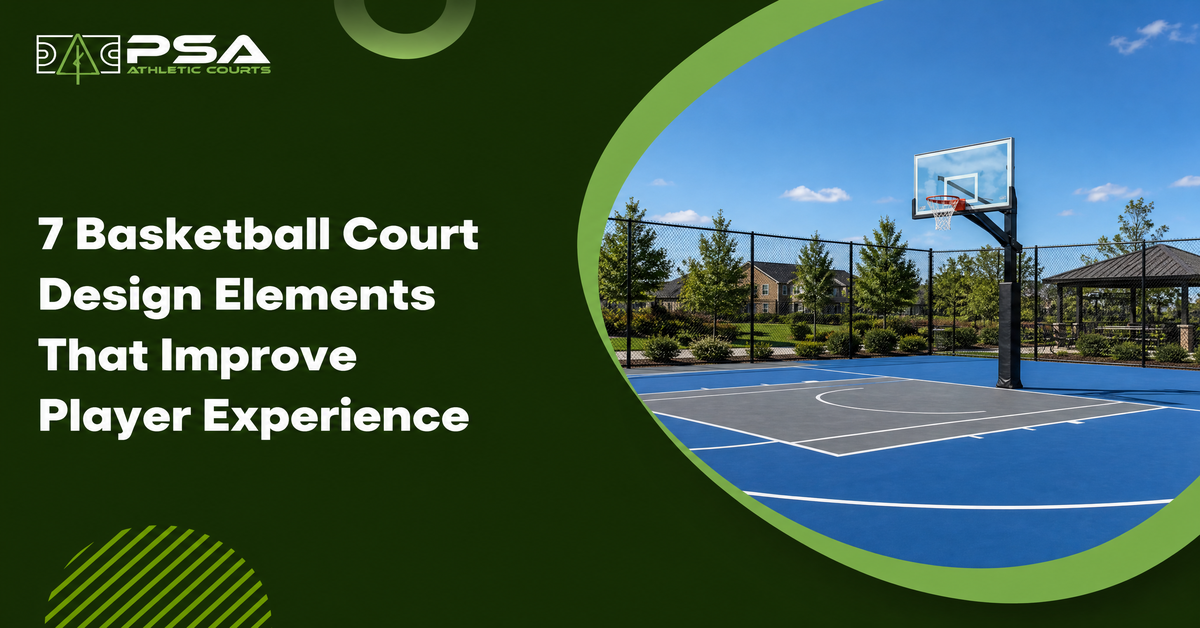

A well-planned Basketball Court Design does much more than create an attractive playing space-it directly influences player performance, safety, comfort, and overall enjoyment. Whether you’re building a school gym, community recreation area, sports complex, or backyard court, every design element contributes to the player experience.
From selecting the right basketball court color design to creating a custom basketball court design that fits your needs, thoughtful planning ensures the court performs as well as it looks.
Here are seven essential basketball court design elements that make a real difference.
1. Choose the Right Court Surface
Every successful Basketball Court Design begins with the playing surface.
Indoor courts typically feature hardwood or synthetic sports flooring for consistent ball bounce and player comfort. Outdoor courts often use asphalt, concrete, or modular sports tiles that withstand changing weather conditions while maintaining traction.
The right basketball court surface improves movement, reduces fatigue, and minimizes injury risks during gameplay.
Why it matters:
- Better shock absorption
- Consistent ball response
- Improved player safety
- Longer court lifespan
2. Optimize Court Dimensions and Layout
Proper court dimensions ensure players have enough room to move freely without feeling restricted.
A professional Basketball Court Design follows regulation measurements whenever possible. However, residential and recreational courts can be customized into half-courts or compact layouts while maintaining comfortable spacing around the sidelines and baselines.
Adequate clearance also improves safety by reducing collisions with walls, fences, or nearby obstacles.
3. Create an Effective Basketball Court Color Design
A carefully planned basketball court color design enhances both aesthetics and functionality.
Different color combinations help define playing zones, improve line visibility, and create a unique identity for schools, sports clubs, or homeowners. Contrasting colors between the key, three-point area, and surrounding court make gameplay easier while giving the court a professional appearance.
Popular color combinations include:
- Blue and gray
- Green and tan
- Black with bright accents
- Red and light gray
Choosing UV-resistant coatings also helps outdoor courts maintain their appearance for years.
4. Install High-Quality Basketball Goals
Even the best Basketball Court Design cannot perform well without durable basketball systems.
Professional-grade hoops feature tempered glass backboards, heavy-duty rims, and adjustable height mechanisms when required. Stable goal systems provide consistent rebounds while improving shooting accuracy and overall gameplay.
Quality equipment also reduces maintenance costs over time.
5. Add Proper Lighting for Extended Play
Lighting plays a major role in player visibility and safety.
For outdoor courts, LED sports lighting allows games to continue after sunset while maintaining consistent visibility across the playing surface. Indoor courts require evenly distributed lighting that minimizes glare and shadows.
Proper lighting improves:
- Shooting accuracy
- Player reaction time
- Spectator experience
- Overall court safety
Modern LED systems are also energy-efficient and require less maintenance than traditional lighting.
6. Include Safety Features Around the Court
A complete Basketball Court Design extends beyond the playing area.
Protective fencing, padded walls, proper drainage, and non-slip surface coatings all contribute to a safer environment. Outdoor courts especially benefit from drainage systems that prevent standing water and extend surface life.
Additional safety features may include:
- Bench seating
- Equipment storage
- Protective padding
- Clearly marked boundaries
These details create a more comfortable experience for players and spectators alike.
7. Invest in a Custom Basketball Court Design
Every facility has unique goals, which is why a custom basketball court design offers significant advantages.
Custom courts allow owners to incorporate team logos, school colors, branding elements, personalized graphics, and multi-sport layouts. Residential courts can be designed around available backyard space, while schools and sports facilities can maximize player development through specialized layouts.
A custom design also ensures the court complements the surrounding architecture and landscape while delivering the best possible playing experience.
Benefits include:
- Personalized appearance
- Efficient space utilization
- Enhanced property value
- Greater player engagement
Why Basketball Court Design Matters
A thoughtfully planned Basketball Court Design combines performance, safety, durability, and visual appeal into one complete facility. Every design decision-from selecting the ideal surface to creating an attractive basketball court color design and investing in a custom basketball court design-helps improve how players interact with the court.
Whether the goal is competitive play, recreational use, or community engagement, investing in quality design features creates a court that players enjoy for years.
Final Thoughts
The best basketball courts are built with players in mind. By focusing on these seven essential design elements, you can create a court that delivers superior performance, lasting durability, and an outstanding playing experience. Whether you’re planning a professional sports facility or a residential project, a well-executed Basketball Court Design ensures your investment provides long-term value while standing out both visually and functionally.