
Growing a business has never been simply about increasing sales. Sustainable growth also depends on how efficiently a company manages its inventory, equipment, materials, and operational resources. As organizations expand, storage quickly becomes one of the biggest challenges. For decades, the obvious solution was building larger warehouses or leasing additional commercial space. While those options still exist, they often require significant financial investment, lengthy construction timelines, and long-term commitments that may not suit today’s fast-moving business environment.
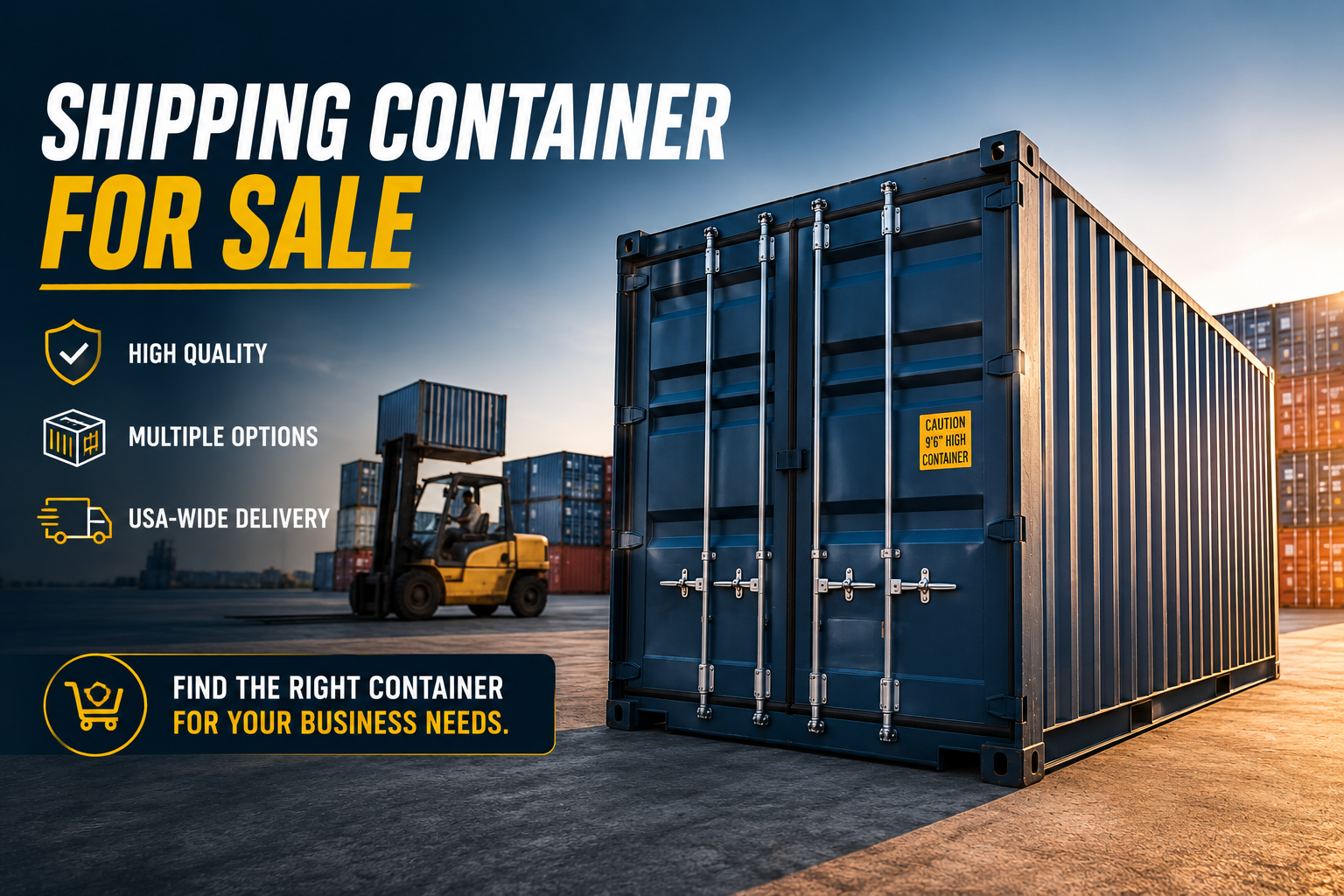
Instead of investing heavily in permanent infrastructure, businesses are increasingly turning toward shipping containers as practical, scalable, and cost-effective storage solutions. Originally engineered to transport cargo across international shipping routes, these steel containers have evolved into versatile commercial assets that serve industries ranging from construction and manufacturing to retail, agriculture, logistics, and industrial operations. Their durability, portability, and immediate availability make them an attractive alternative for organizations that need reliable storage without interrupting daily operations.
Modern businesses value flexibility just as much as growth. Markets shift quickly, customer demand changes unexpectedly, and operational requirements rarely remain the same for long. Companies that choose adaptable storage solutions can respond faster to new opportunities while keeping expansion costs under control. Rather than waiting months for new buildings to be completed, they gain additional capacity almost immediately, allowing teams to remain productive while supporting future growth.
Business Growth Should Never Be Delayed by Storage Limitations
One of the biggest obstacles growing businesses encounter is running out of usable space. New inventory arrives, equipment increases, seasonal stock accumulates, and suddenly existing facilities become overcrowded. Limited storage often creates operational bottlenecks that affect productivity long before businesses recognize the problem.
Expanding warehouse facilities may appear to be the logical solution, but construction projects require permits, planning, contractors, engineering work, and significant capital investment. During this lengthy process, businesses continue operating within crowded environments that reduce efficiency and complicate inventory management.
Flexible storage solutions allow organizations to increase capacity immediately while avoiding lengthy disruptions. This enables businesses to continue growing without allowing storage shortages to slow their momentum.
Modern Companies Prefer Flexible Infrastructure
Today’s commercial landscape rewards adaptability. Companies regularly expand into new markets, relocate operations, introduce additional product lines, or adjust inventory based on changing customer demand. Permanent buildings often struggle to provide the same level of flexibility.
Portable storage gives businesses the ability to scale according to actual operational needs rather than long-term assumptions. Additional units can be added during periods of growth, relocated when operations move, or repurposed for entirely different business functions.
This flexibility allows organizations to invest strategically while maintaining greater control over future expansion plans.
Faster Solutions Create Faster Opportunities
Business opportunities rarely arrive with months of preparation. Winning a major contract, opening a new distribution center, or expanding manufacturing capacity frequently requires additional storage within days rather than seasons.
Waiting for traditional construction can delay important projects, limit production, or reduce customer satisfaction. Rapidly deployable storage allows businesses to respond immediately instead of postponing growth because of infrastructure limitations.
When storage becomes available quickly, companies remain focused on serving customers instead of managing space shortages.
Built to Perform in Demanding Conditions
Commercial storage solutions must withstand far more than ordinary daily use. Heavy equipment, changing weather, moisture, dust, temperature fluctuations, and continuous loading all place significant demands on storage infrastructure.
Containers were originally engineered to survive international cargo transportation across oceans while protecting valuable freight. Their steel construction naturally makes them suitable for commercial environments where durability and long-term reliability remain essential.
Businesses benefit from secure storage that continues performing under demanding conditions while requiring relatively little maintenance throughout its lifespan.
Supporting Multiple Industries With One Practical Solution
The value of container storage extends far beyond logistics companies. Businesses across numerous sectors continue finding practical applications that improve efficiency without increasing operational complexity.
Common commercial uses include:
- Construction equipment storage
- Manufacturing components
- Retail overflow inventory
- Agricultural machinery and supplies
- Automotive parts
- Event equipment
- Industrial tools
- Emergency backup inventory
- Seasonal merchandise
- Business archives
Because storage needs vary between industries, adaptable solutions provide greater long-term value than highly specialized facilities designed for only one purpose.
Smarter Organization Improves Daily Productivity
Storage is not simply about creating additional space. Effective organization influences how efficiently employees complete everyday tasks.
Well-planned storage systems reduce unnecessary movement, simplify inventory tracking, improve workplace safety, and help teams locate materials more quickly. Organized inventory also minimizes product damage while supporting faster order fulfillment and better customer service.
When businesses eliminate unnecessary clutter, daily operations naturally become more productive.
Expansion Without Financial Pressure
Constructing additional warehouse space represents one of the largest investments many businesses ever make. Beyond construction itself, organizations must consider permits, utilities, insurance, maintenance, security systems, landscaping, and ongoing facility expenses.
Choosing a shipping container for sale often provides a far more practical alternative for businesses that require immediate storage without assuming long-term financial commitments. Instead of allocating large budgets toward permanent buildings, companies can invest available capital into hiring employees, purchasing equipment, improving logistics, or expanding customer services.
This balanced approach allows growth to continue while preserving financial flexibility for future opportunities.
Sustainability Is Becoming Part of Smart Business Decisions
Environmental responsibility increasingly influences purchasing decisions across nearly every industry. Businesses are actively seeking practical ways to reduce waste while improving operational efficiency.
Repurposing durable steel containers extends the useful life of existing industrial resources rather than requiring entirely new construction materials. At the same time, adaptable storage reduces unnecessary building expansion for organizations whose storage requirements may continue evolving over time.
Combining sustainability with operational flexibility allows businesses to pursue long-term growth while supporting responsible resource management.
Conclusion
Successful businesses understand that expansion involves more than increasing physical space. It requires making strategic investments that improve efficiency, support future growth, and allow organizations to respond quickly as market conditions evolve.
Choosing shipping containers provides businesses with dependable, scalable, and cost-effective storage that adapts alongside changing operational requirements. Rather than waiting months for traditional infrastructure projects, companies gain immediate storage capacity while maintaining greater financial flexibility. For organizations focused on long-term growth, practical solutions often create the strongest competitive advantage.
Frequently Asked Questions
1. Why are shipping containers becoming popular for commercial storage?
They offer durable, secure, and scalable storage that can be deployed much faster than constructing new warehouse space.
2. Which industries benefit the most from container storage?
Construction, manufacturing, agriculture, retail, logistics, automotive, and industrial businesses all commonly use containers for equipment and inventory storage.
3. Are shipping containers suitable for long-term business use?
Yes. Their heavy-duty steel construction is designed for demanding environments, making them a dependable long-term storage solution with proper maintenance.
4. Can businesses relocate shipping containers if operational needs change?
Yes. One of their greatest advantages is portability, allowing organizations to move storage where it is needed without rebuilding infrastructure.
5. How do shipping containers help reduce expansion costs?
They eliminate many expenses associated with permanent construction while providing immediate, secure storage that supports business growth without lengthy project timelines.