


The conversation about facial ageing used to lead almost immediately to surgery. Facelifts, brow lifts, and neck lifts were the primary tools available for meaningful skin tightening, and they came with all the risks, downtime, and costs that surgical procedures carry.
That conversation has shifted. A generation of energy-based treatments has changed what is possible without a scalpel, and Ultherapy sits near the top of that list. Understanding how it compares to surgical options helps anyone making this decision think through it clearly.
What Surgical Facelifts Actually Do
A surgical facelift repositions tissue. The surgeon lifts the skin, tightens the underlying muscle layer known as the SMAS, removes excess tissue, and redrapes the skin over a restructured foundation.
The results can be significant. A skilled surgeon can create visible changes in jawline definition, neck laxity, and cheek volume that no non-invasive device currently replicates to the same degree.
The tradeoffs are also significant. Recovery typically runs two to four weeks. Risks include scarring, nerve disruption, infection, and anaesthesia complications. The cost in Singapore ranges from several thousand to tens of thousands of dollars depending on the scope of work.
What Ultherapy Does Instead
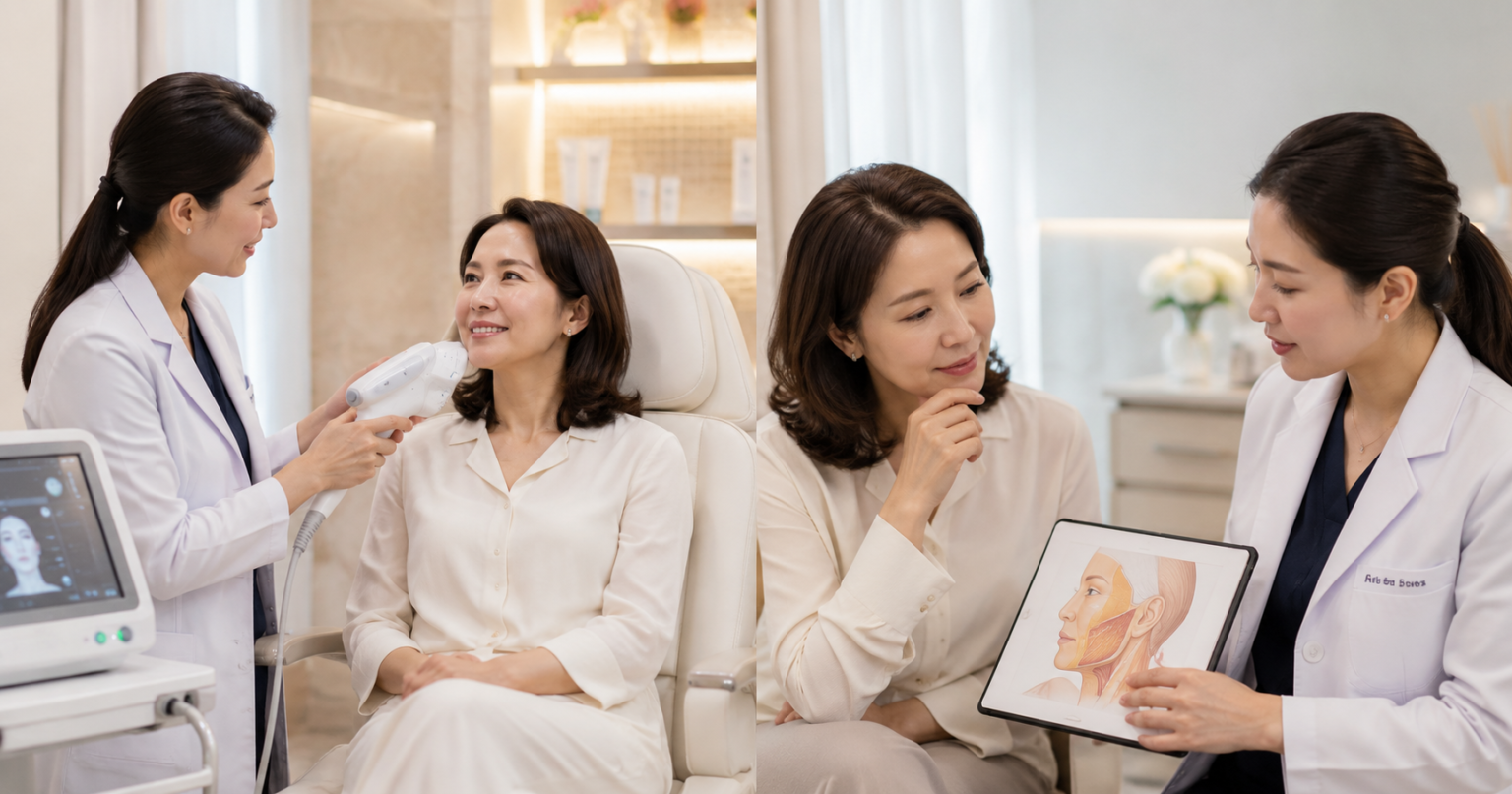
Ultherapy uses focused ultrasound energy delivered to the deep tissue layers below the skin surface. The energy heats the tissue at precise depths, triggering a natural collagen remodelling response without cutting or disrupting the skin surface.
The FDA cleared Ultherapy specifically for lifting the brow, chin, and neck, and for improving lines on the chest. That FDA clearance is meaningful — it reflects a clinical evidence base that many competing devices in this category do not yet have.
Results build over two to three months as new collagen forms. The improvement is real and measurable, but it differs in character from surgical results. Ultherapy tightens and lifts tissue that has mild to moderate laxity. It does not reposition significantly loose skin the way surgery does.
Who Each Option Suits
The right choice depends on the degree of laxity and the outcome someone is looking for.
| Condition | Better Option |
| Mild skin laxity, early signs of ageing | Ultherapy |
| Moderate laxity with good skin quality | Ultherapy |
| Significant sagging or excess skin | Surgical facelift |
| No tolerance for downtime | Ultherapy |
| Looking for gradual, natural-looking improvement | Ultherapy |
| Looking for dramatic structural repositioning | Surgical facelift |
Ultherapy is frequently used by people in their thirties and forties who want to address the early stages of skin laxity before surgical intervention becomes relevant. It is also used by people who have had surgery and want to maintain results over time.
The Downtime Comparison
One of the clearest practical differences is recovery time.
A surgical facelift requires weeks of restricted activity, visible bruising and swelling, and careful wound management. Most patients need at least two weeks before returning to work and several more before social activities feel comfortable.
Ultherapy has no downtime in the clinical sense. Some people experience mild redness or swelling immediately after treatment, but these effects typically resolve within hours. Most patients return to their normal schedule the same day.
For anyone balancing professional or family commitments, this distinction often carries significant weight in the decision.
Longevity and Maintenance
Surgical results last longer in absolute terms. A well-performed facelift can hold its improvements for seven to ten years before revision becomes relevant, though the underlying ageing process continues throughout.
Ultherapy results typically last twelve to eighteen months before a maintenance session is beneficial. This is not a flaw in the treatment — it reflects the biological reality that collagen production slows over time and requires periodic stimulation.
Many patients build Ultherapy into an annual or biannual aesthetic maintenance routine rather than viewing it as a one-time intervention.
Cost Over Time
The upfront cost of Ultherapy is considerably lower than surgery. The ongoing maintenance cost means the cumulative investment over a decade may be comparable for some patients — though without the surgical risks at any point.
For anyone exploring ultherapy treatment singapore, a consultation with a qualified aesthetic doctor is the most reliable way to assess whether the current degree of skin laxity is well-suited to this treatment or whether a more significant intervention would produce a more satisfying result.
Final Thoughts
Ultherapy and surgical facelifts are not competing for the same patient. They address different degrees of skin laxity and serve different goals.
For mild to moderate laxity, no downtime, and a preference for gradual natural improvement, Ultherapy is a well-evidenced choice. For significant structural changes that a non-invasive device cannot achieve, surgery remains the more effective option.
Understanding that distinction is the foundation of a good aesthetic decision.



