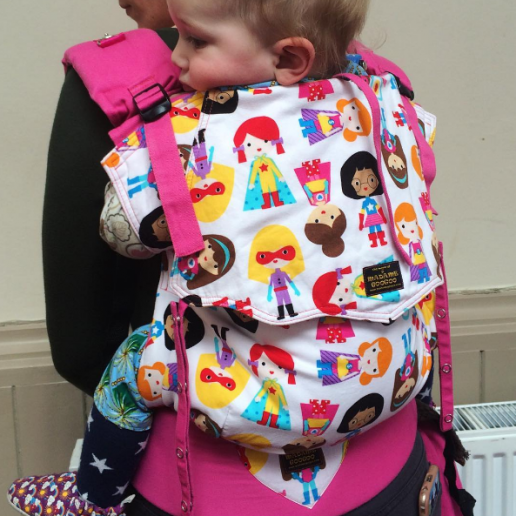

Most one-year-olds have enough body control for back wearing. However, age alone never gives families the complete safety answer.
Your child must meet the carrier manual’s exact rules first. They also need steady head, neck, and trunk control.
By nine months, sitting without support is a CDC developmental milestone. Development still differs between children after premature birth or medical concerns.
Use this guide alongside your manual and pediatric advice.
Start With Independent Sitting
A child should hold an upright position without hands or furniture supporting them. Their upper body should stay steady during small turns and gentle reaches.
Most structured carrier instructions require independent sitting before back use. Some products also set minimum heights or weights for this position.
Watch your child during ordinary floor play before deciding:
- Your child keeps their head upright during several minutes of play.
- Their chest does not fold forward after minor balance changes.
- They recover from gentle leaning without dropping against nearby support.
- Their body keeps centered while reaching toward a nearby toy.
A first birthday alone never replaces these important readiness checks. Speak with your pediatrician when development has been delayed or uneven.
What Changes Between Ages One and Four?
At one year, body readiness deserves your closest attention. Your child may meet every milestone yet remain too small for one model.
Around age two, fit starts causing more trouble than readiness. Longer thighs and a taller torso can outgrow a standard panel.
Between ages three and four, body weight adds another major factor. Your child may still want closeness during travel or crowded outings.
Toddler and kid carriers should match the child’s present body. Actual measurements provide better guidance than clothing size alone.
Check More Than the Weight Number
Every carrier model has its own approved child weight range. Read the sewn label and current manual before trying each position.
Standard models may stop near 45 pounds for child weight. Larger toddler products may reach 60 pounds, while preschool models can reach 70 pounds.
The kid carrier weight limit is an upper safety boundary. It does not prove your child still fits the seat correctly.
A lighter four-year-old can outgrow a short panel before reaching maximum weight. Never add homemade extenders or replacement buckles without manufacturer approval.
Check the Seat and Back Panel
A toddler carrier must support your child without forcing an awkward position. The seat should reach across both thighs without pressing behind their knees.
Healthy hip guidance recommends bent hips with knees slightly above the bottom. The thighs should receive support toward each knee joint.
The back panel should support the child’s torso securely. It should never cover their face or push their head forward.
Review these fit points after every noticeable growth change:
- Both knees can bend freely outside the carrier panel.
- Fabric does not bunch deeply inside either knee crease.
- The top panel supports the upper back without covering airways.
- Your child cannot lean far enough to open unsafe side gaps.
Poor panel fit cannot be repaired through tighter straps. Your family may need the next product size instead.
Back Carrying Toddler Safety
Practice your back carrying toddler loading method slowly inside a clear home area. Begin over a bed with another adult standing nearby. Keep one hand supporting your child during each transfer step. Follow the exact loading method shown inside your product manual.
Tighten every strap before taking your first careful steps indoors. Loose fabric can allow slumping or pull the child’s weight backward. Use a mirror or phone camera for frequent checks. Their face must stay uncovered while breathing continues without effort.
Turn carefully around doorways because your child extends behind your body. Stairs also require slower steps and a clear path. Avoid cooking, running, cycling, or handling hot drinks during use. Health Canada warns against these activities with slings or carriers.
What Happens When Your Child Sleeps?
Sleep makes back monitoring much harder for every parent. You cannot easily watch chin position or facial color behind you. Health Canada advises moving a sleeping child into an approved sleep space. A carrier should never replace a crib or proper sleep surface.
Stop immediately when your child slumps or breathing changes. Remove them carefully before adjusting any hidden strap or panel.
Your Body Sets Another Limit
The printed maximum only describes the product’s tested child load. It does not measure your balance or what your body can manage.
Begin with brief sessions around your home before longer outings. Stop immediately when you notice pain or lasting numbness anywhere.
Tingling or unstable footing both require immediate carrier removal. You may need another adult when mounting an older child. Asking for help is safer than testing a difficult transfer alone.
The Simple Answer
Most children aged one through four have the basic development needed. Safe use still depends upon independent sitting and correct product fit.
Check the manual before each new stage of wearing your child. Follow every listed age, weight, height, and position rule.