

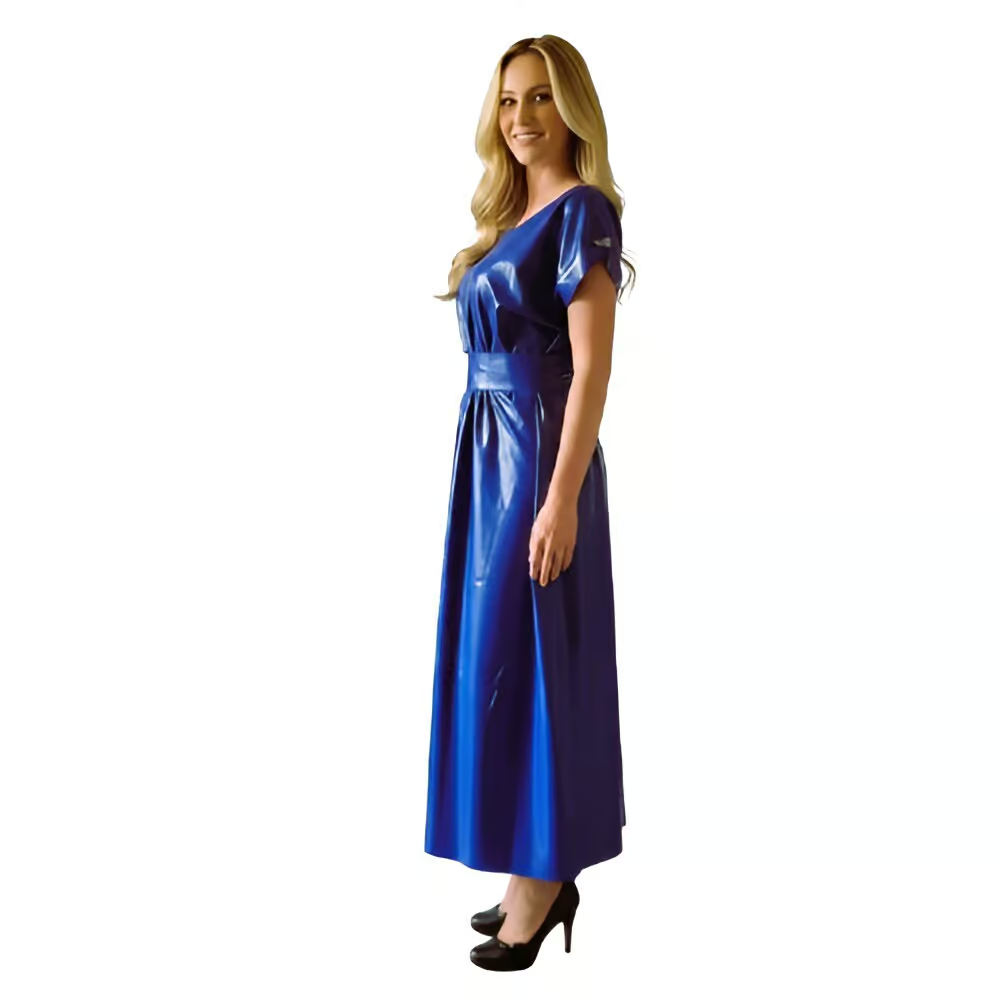

A floor-length latex dress can look quietly magnificent in a photograph. Choosing that same length for an evening out is a more complicated decision. The hem that gives the image its drama may also be the part you keep watching when you walk, sit down or approach a flight of stairs.
My starting point would be the evening, not the photograph. Is this a short studio session, a seated dinner or a night that involves pavements, taxis and dancing? A long silhouette can work for each, but the same hem and skirt cut will not necessarily suit them all.
Length changes the look and the clearance beneath a dress. It does not, by itself, determine how tightly the garment fits, how freely you can move or how long it will last.
The hem does not control the whole fit
Latex stretches, but the fit of a maxi dress depends on its pattern, measurements, thickness and construction. A close-cut skirt and a flared skirt can behave quite differently at the same length.
Shortening a hem does not automatically release tension through the waist or hips. If the dress pulls across those areas, the cause may be the sizing or cut rather than the amount of material below the knees. Removing a few centimetres cannot reliably correct that.
Likewise, a longer skirt does not guarantee a smooth, crease-free silhouette. Where a seam sits, how the panels are shaped and how the dress fits when you move all matter. The useful question is not simply whether the dress is long enough, but whether it fits without needing to be pulled into position.
Floor-length and ankle-length tell different stories
A hem near the floor can create a continuous line, particularly when the shoes are mostly hidden. It can feel formal and theatrical without requiring much additional styling.
An ankle-length hem lets the footwear become part of the outfit. Boots, heels or flats can change its mood, and the visible gap beneath the skirt can make the long silhouette feel lighter. Neither length is universally more flattering: the skirt shape, the wearer’s preferences and the whole outfit matter more than a rigid rule about body type.
A mid-calf version is a different design choice, not a failed maxi dress. It may suit a deliberately sharper silhouette. Before shortening a garment that far, consider whether the existing taper or flare will still look balanced at the new hem.
The finish also changes what you notice. Polished latex picks up distinct reflections, while a less polished surface gives a quieter effect. Lighting can emphasise the panels and folds, so judge the dress in the setting where you expect to wear it rather than under one flattering light.
Walking room comes from more than clearance
Lifting the hem clear of the ground reduces the chance of stepping on it. It does not necessarily provide a longer stride. A narrow skirt can still restrict movement around the knees and calves even when it ends above the ankles.
Skirt width, flare and any slit need to be considered alongside length. A slit’s position and height affect both movement and coverage; simply asking for a shorter hem may not address the part that feels restrictive.
When checking fit, walk at a comfortable pace, sit down and carefully try the movements you will need at the event. Do not force the material to stretch further just to prove you can move. If it pulls painfully or prevents normal movement, discuss an adjustment with the maker.
Shortening latex does not make it breathable. Temperature, coverage and the conditions of wear still matter. There is no fixed number of hours that makes a dress comfortable or safe for everyone. Take breaks or change if you become too hot or uncomfortable.
Choose the shoes before confirming the length
A hem measured barefoot may sit very differently with heels. If you intend to wear a particular pair, include them when checking the finished length and tell the maker how you want the dress to sit.
“Ankle-length” and “a few centimetres above the floor” are not interchangeable descriptions. One refers to a point on your body; the other depends on your shoes and stance. Agree the measurement starting point with the maker and explain whether you want the ankles visible or the footwear largely covered.
For an evening involving travel and walking, I would prioritise a hem that stays clear of the ground in the chosen shoes, together with enough room to move. For a controlled photoshoot, a longer hem may be worth the extra attention, but that does not mean it should drag wherever you walk.
A small alteration can become a construction job
It is tempting to think of shortening as cutting a straight strip from the bottom. On a fitted or flared dress, the new edge falls at a different point in the pattern. That can change the opening’s width and its relationship to the seams or slit.
A bonded hem also needs its finish considered, not just its new length. Cutting above it removes that finished edge, and rebuilding it may require preparation and suitable latex adhesive. Ask the maker about alterations rather than treating the existing hem as a cutting guide.
Thickness adds another variable, but it does not establish a universal length rule. Do not assume a dress described as 0.40mm or 0.45mm must reach the floor to avoid creasing. The pattern and fit still need to be assessed together.
With a standard-size latex dress, check whether its stated length and proportions suit you before ordering. Made-to-measure work gives you an opportunity to specify length alongside the other measurements, but the maker still needs clear information about footwear, movement and the intended silhouette.
Keeping the hem off the floor is practical care
A dragging hem can catch under shoes or rub against rough surfaces. Keeping it clear reduces that particular exposure to damage, but no length can guarantee years of wear or protect every seam.
After wearing, hand wash the dress with lukewarm water and mild latex-safe soap. Let it dry fully away from sunlight and heat, and use an appropriate silicone-based latex dressing when polishing. Keep ordinary oils away from the material and store it separately from metal and sharp objects.
The best length is the one that gives you the silhouette you want without asking you to manage the dress constantly. Once the hem, skirt shape and shoes work together, you can spend less of the evening looking down and more of it actually enjoying what you are wearing.




