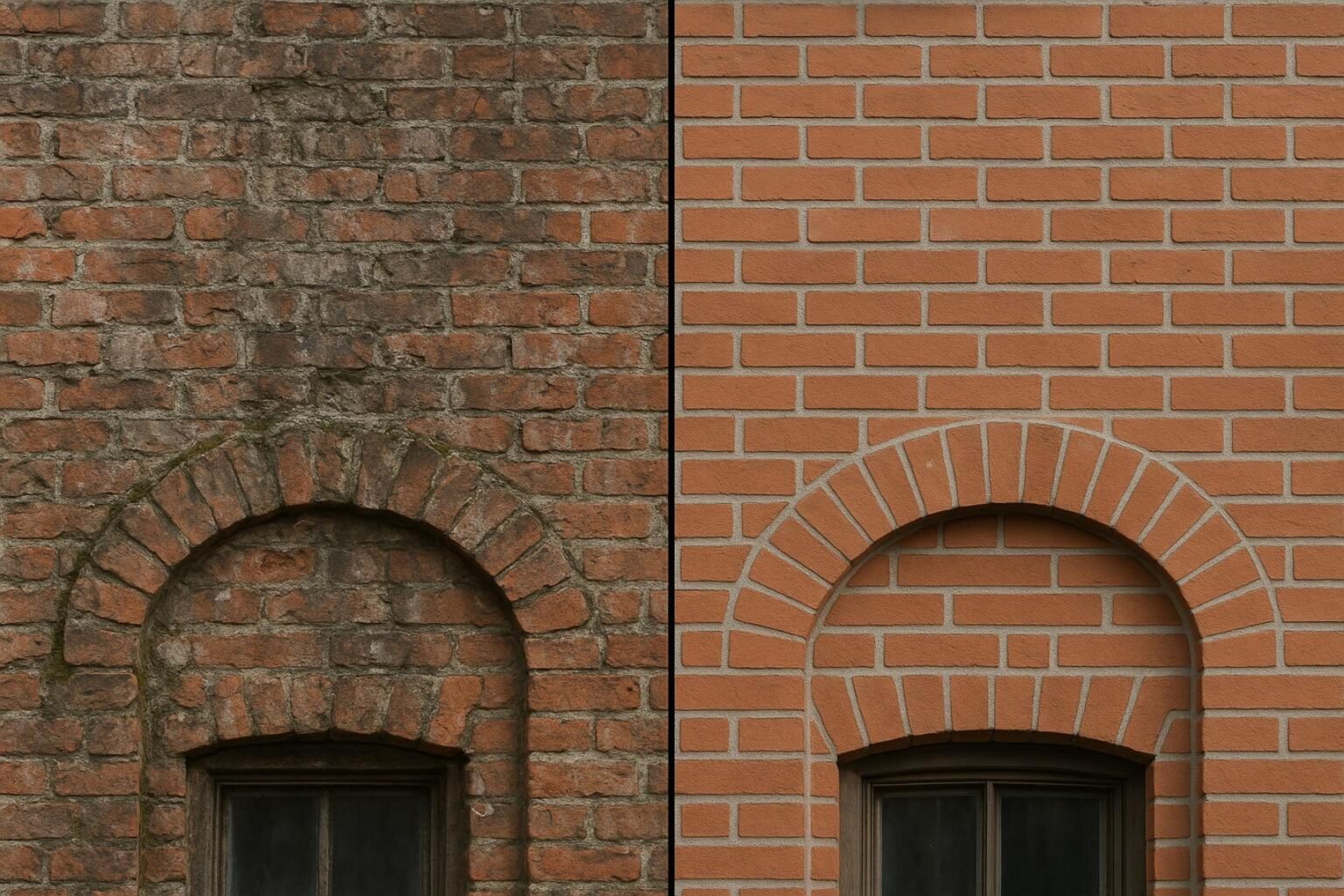

Masonry restoration is more than a basic fix. It is a key way to keep buildings standing longer and protect what makes them valuable. So, how does masonry restoration protect historic and modern buildings? It does this by carefully fixing damage, strengthening the structure, and keeping the original look and details that make each building different. The work often includes repairing and stabilizing walls using methods and materials that match, or work well with, the original construction. This helps extend a building’s life for many more years. If you want to learn more about these services, you can visit https://novaconstructionservices.com/services/facade-restorations/masonry-restoration/.
The main goal of masonry restoration is not to make a building look brand new. The goal is to keep its character while making it last longer through careful, skilled work. This often includes important jobs like repointing brick or stone, swapping out failing materials with compatible ones, and adding water protection steps to help slow future damage. Put simply, it helps keep buildings from different time periods safe, usable, and true to their original design.
What Is Masonry Restoration?
Masonry restoration is specialized work that focuses on repairing and stabilizing buildings using methods and materials that match, or fit well with, the original construction. Masonry is one of the oldest building methods and it can last a long time, but it still needs regular upkeep and the right kind of repairs. The aim is to protect what is already there and help the building stay in service longer, instead of replacing materials without a plan.
Key Differences between Restoration, Repair, and Replacement
It helps to know the difference between restoration, repair, and replacement.
- Restoration is broader work that brings a building back to a certain period or condition while protecting its original look and extending its overall life.
- Repair means smaller, focused fixes, like patching cracks or repointing mortar joints. These repairs are often part of a larger restoration plan.
- Replacement is usually the last option. It is used only when masonry pieces are missing, badly broken, or cannot be fixed.
In both historic and modern masonry work, a common rule is to keep as much original material as possible. Replacement should be based on need, not preference.
Why Masonry Materials Require Special Care
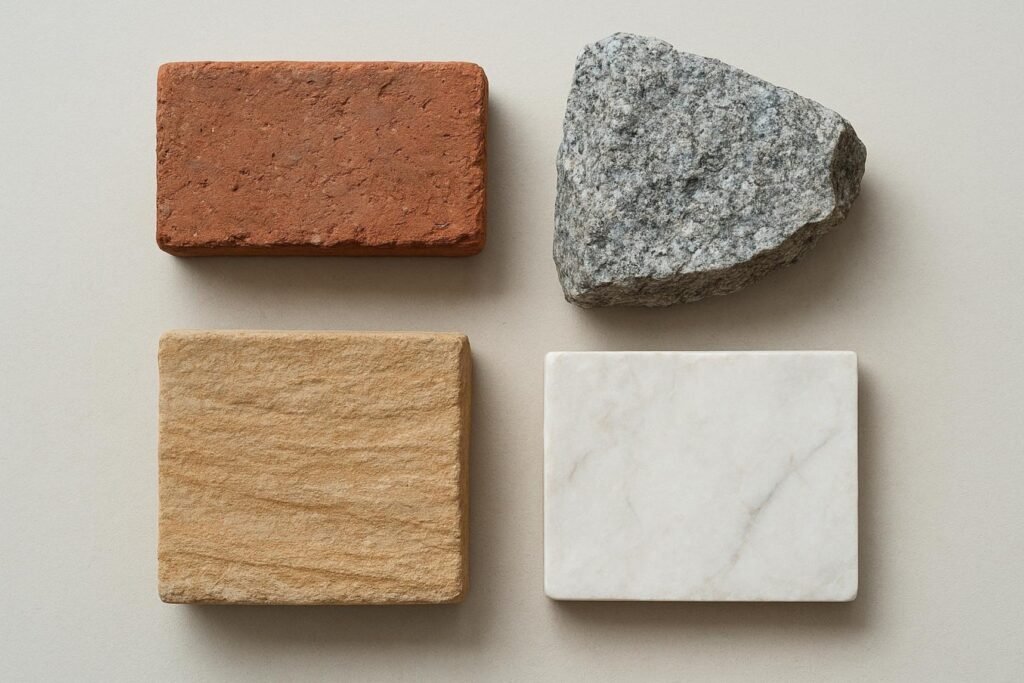
Materials like brick, limestone, granite, and sandstone were chosen because they last and look good. They are often the main outside and structural materials in historic buildings, and many modern ones too. But many older buildings were not built with modern moisture barriers or advanced flashing. Because of that, they rely heavily on their exterior surfaces to handle water. Since different masonry types react differently to water, temperature, and movement, proper care takes knowledge of traditional building methods and modern material behavior.
Why Masonry Restoration Is Essential for Historic and Modern Buildings
Masonry restoration is not just about appearance. It is a long-term investment in the safety, strength, and meaning of a building. Historic buildings are records of local history. Their brick and stone work shows the skill and style of the time they were built. Restoring them helps protect that craft, supports cultural identity, and keeps the structure stable. Modern buildings also benefit because masonry still wears down and needs upkeep to perform as expected.
How Restoration Preserves Structural Integrity
A building’s structural strength matters, especially with masonry. Problems like cracks, missing mortar, separated joints, staining, and surface wear can grow into major structural issues if ignored. Restoration addresses these problems directly, often going deeper than surface fixes to support the building’s strength.
For example, restoration mortar is selected so it bonds correctly and supports the wall over time. Fixing weak points early can prevent much larger repair costs later. By dealing with trouble spots before they spread, restoration helps keep buildings safe for the people inside and for the area around them.
The Role of Masonry Restoration in Maintaining Architectural Value
Restoration also protects a building’s design value. It repairs key details and keeps the building historically accurate, so older homes and public buildings keep their original look. A restored façade can improve curb appeal, which often helps resale and rental value.
On a larger scale, preserved buildings support neighborhood identity. In many places, restored historic areas attract visitors, support local businesses, and can lift nearby property values.
Why Preservation Is Preferred Over Replacement
In building care, preservation is usually better than full replacement. The goal is to keep as much original material as possible. Many times, targeted repairs and repointing are enough to stabilize a structure, so full replacement is not needed.
This approach:
- saves money
- keeps the historic character of the building
- avoids problems caused by mismatched new and old materials
It is also better for the environment. Restoring existing masonry creates less waste and uses fewer new resources than tearing down and rebuilding. Many people sum it up like this: the greenest building is often the one that is already standing.
Common Causes of Masonry Deterioration
Even strong masonry buildings, old or new, are affected by time and weather. Natural forces and human factors can slowly damage brick and stone. Knowing the main causes helps owners act before damage becomes severe.
Impact of Moisture, Water Intrusion, and Freeze-Thaw Cycles
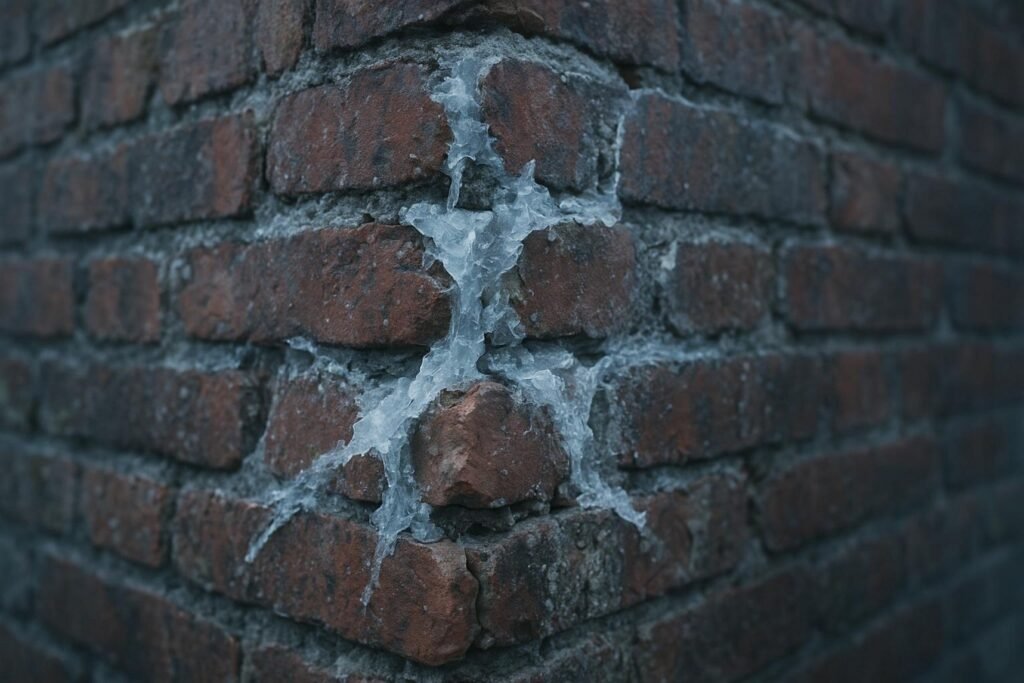
Water is one of the biggest threats to masonry, especially in older buildings. Since many older structures do not have modern moisture barriers, they depend on sound exterior walls to keep water out. When cracks form, mortar breaks down, or parapets fail, water can move into the wall.
In cold areas, freeze-thaw cycles make it worse. Water inside masonry expands when it freezes, which can cause more cracking and spalling (surface flaking). Over many cycles, damage can build up quickly.
Consequences of Pollutants and Environmental Factors
Masonry also wears down from other outside forces. Pollutants, acid rain, and plant growth like algae, moss, and fungi can slowly eat away at surfaces and cause stains or material loss. Seasonal changes, shifting humidity, and natural building movement also stress masonry and mortar, speeding up wear over time.
Aging Materials and Neglected Maintenance
Materials naturally age, and mortar joints often fail first because they are softer and more exposed. Signs include cracking, missing mortar, joint gaps, stains, and worn surfaces. If these issues are ignored, they tend to spread and may lead to major structural problems.
Poor repairs from the past can also cause damage. For example, using mortar that is too hard for older brick can trap moisture and stop the wall from releasing water the way it was meant to.
Comparing Traditional and Modern Masonry Materials
Restoration work often has to balance two needs: keeping the original look and using materials that perform well today. With masonry, that means understanding how older materials behave and when modern options make sense.
Understanding the Sensitivity of Older Bricks
Older bricks and stones often have properties that require extra care. Many historic buildings used lime-based mortar, which is softer and more flexible than modern Portland cement mortar. This softer mortar helps the wall move slightly without cracking the brick or stone. It also lets the wall “breathe,” so moisture can move in and out.
If a hard, dense modern mortar is used on softer historic masonry, moisture can get trapped in the wall. That can lead to cracking and faster damage to the original units. That’s why new pointing mortar should not be stronger, denser, or less water-absorbent than the original mortar and masonry.
Modern Materials: Performance and Compatibility
Modern materials can sometimes match historic appearance while lasting longer. They can copy old details and resist common problems like cracking, rot, and crumbling.
Examples include:
- Fiberglass (FRP): often used for large elements like columns and domes because it resists moisture and corrosion.
- Glass Fiber Reinforced Concrete (GFRC): can look like stone but weighs much less, which helps on larger buildings.
- Cellular PVC trim: can copy wood details without rotting, warping, or splitting.
- High-density polyurethane: used for smaller details like balustrades or decorative trim, offering fine detail with strong weather resistance.
These materials do not replace skilled craft. They help protect building features while lowering long-term maintenance needs.
How Masonry Restoration Protects and Extends Building Lifespans
Masonry restoration is a planned approach to building care. It fixes current problems and helps prevent future ones, which can keep buildings working for much longer.
Benefits for Historic Structures
For historic buildings, restoration can add many decades of life when the right materials and methods are used. This protects the building’s story and also makes financial sense. Proper restoration can improve curb appeal, raise resale and rental value, and show pride in community history.
In some areas, keeping a historic façade may also make a property eligible for local incentives or tax credits. Just as important, fixing masonry and water problems early helps owners avoid bigger structural failures later, especially those caused by long-term water entry.
Advantages for Modern Buildings
Modern buildings benefit too. Even newer masonry needs maintenance and timely repairs. Fixing problems early helps stop small issues from turning into expensive ones. This supports safety and protects property value.
Well-repaired masonry can also help energy performance by improving how the building envelope works, which may lower heating and cooling costs. For both older and newer buildings, regular restoration work can extend the life of the exterior walls and reduce major future repairs.
Key Masonry Restoration Techniques and Technologies
Masonry restoration uses different methods based on the type of damage and the building’s needs. Good results depend on knowing older building methods and using modern tools carefully. A full condition review should happen before work starts.
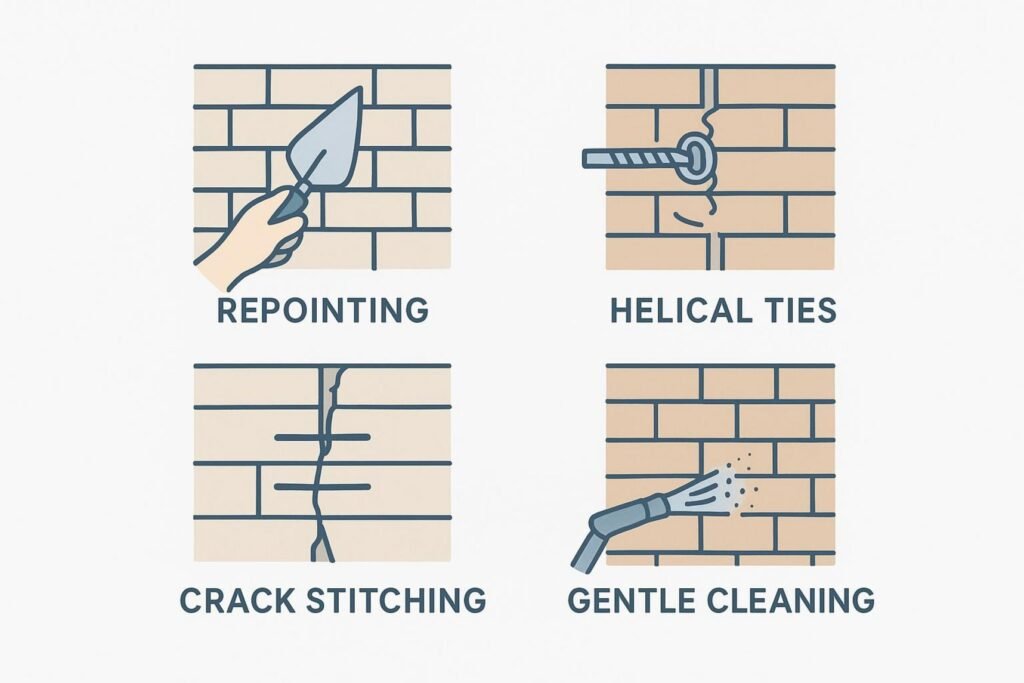
Masonry Repointing: Restoring Mortar Joints
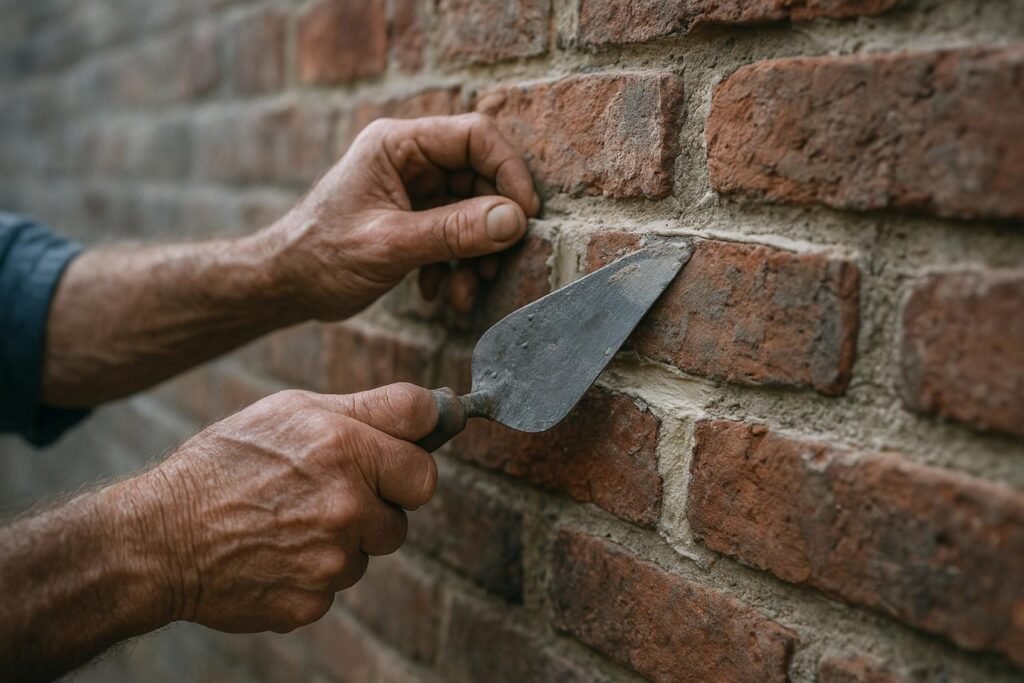
Repointing is one of the most common and effective masonry restoration methods. Mortar joints can make up a large part of a façade, and they often fail first due to weather and age. Repointing means removing weak mortar and installing new mortar in the joints.
The new mortar is matched to the original as closely as possible, including:
- mix type
- color
- texture
- strength
Getting the mortar right matters. If it is too strong, too dense, or absorbs less water than the original, it can trap moisture and damage the surrounding masonry. When done correctly, repointing strengthens the wall, improves water resistance, and keeps the wall able to release moisture.
Cleaning Methods for Various Masonry Surfaces
Cleaning can improve appearance, but it must be done carefully. Aggressive methods like sandblasting can remove the protective outer layer of masonry and speed up future wear, so they should be avoided.
Safer methods can include:
- low-pressure washing for dirt and grime
- carefully chosen chemical cleaners for stains or graffiti (when safe for the surface)
- poulticing, which uses absorbent material to pull out deep stains
Before cleaning, the type of dirt and the type of masonry must be understood. Sometimes, leaving the surface alone is the safest option.
Waterproofing and Protective Coatings
Water can enter cracks and joints, freeze, expand, and cause wide damage. Restoration often focuses on keeping water out while still letting trapped moisture escape.
Common steps include:
- repairing or adding flashings and weep holes to move water away
- improving drainage around the building
- using breathable water repellents when appropriate
In many cases, coating systems should not be applied to existing or historic masonry façades. Even breathable coatings can trap moisture or change how vapor moves through the wall, which may cause early failure. A careful review is needed to choose the right approach.
Structural Reinforcement and Crack Repair
Many historic masonry buildings depend on thick load-bearing walls. Over time, shifting foundations, harsh weather, or lack of upkeep can weaken them. Modern restoration can strengthen walls without changing the building’s look.
Methods include:
- Helical ties: metal rods installed in mortar joints to help stabilize walls.
- Masonry stitching: stainless steel rods and grout used to stabilize cracks.
- Grouting voids: injecting grout into empty spaces to stabilize loose or hollow areas.
These methods are selected and installed to improve strength while keeping the original appearance.
Material Matching for Authentic Restoration
Material matching is one of the most sensitive parts of restoration. When bricks or stones are too damaged and must be replaced, the new units should match the original as closely as possible, including:
- size and shape
- color and texture
- absorption rate
This helps the repair blend in and behave correctly over time. Tools like digital scanning can capture original ornament details very accurately. That data can be used for CNC work or mold casting to recreate pieces like brackets, cornices, or other façade elements without harming the historic look.
New materials should also be “sacrificial,” meaning they should be slightly weaker than the original masonry so future stress does not damage the historic material.
Challenges and Risks in Masonry Restoration Projects
Masonry restoration, especially on historic buildings, comes with unique risks. It takes technical skill, knowledge of building history, and a clear understanding of how materials work together.
Balancing Authenticity with Performance
A common challenge is keeping the historic look while meeting modern expectations for safety and performance. Preservation groups may require close matching of original designs and materials, which can conflict with goals like longer life or better energy use.
Modern materials can improve performance, but they must be used carefully. If the wrong materials are used—like hard cement mortar on soft historic brick—moisture may get trapped, vapor movement can change, and original masonry can wear out faster. That’s why experienced restoration specialists such as Nova Construction Services match repair materials to the original masonry rather than defaulting to modern mixes. The goal is long-lasting repairs that still respect the building’s historic character.
Addressing Hidden Structural Defects
Another risk is hidden damage inside older walls. Problems like rusted steel, internal voids, or failing anchors can stay out of sight for years. Some older buildings also did not account well for different movement between masonry and steel, which can cause long-term stress and corrosion.
Condition reviews often use non-destructive testing tools such as infrared thermography or ground-penetrating radar to find hidden issues. Even with these tools, small test openings may still be needed to confirm how the building was made and how far the damage goes.
Best Practices for Successful Masonry Restoration
Good masonry restoration happens through planning, careful review, and skilled workers. Following proven practices helps projects last and protects the building’s history.
Comprehensive Condition Assessments
Before any work begins, a full condition assessment should be done. This step helps find the cause and full scope of the damage and shows how the building and its materials function.
A condition assessment often includes:
| Assessment step | What it looks for |
| Visual inspection | Cracks, spalling, water stains, failing mortar, surface wear |
| Material testing | Brick, stone, and mortar properties so new materials will match and work correctly |
| Non-destructive testing | Hidden voids, internal cracking, moisture patterns without damaging the wall |
| Engineering review | Structural risks and repair needs to support a clear restoration plan |
| Background research | Old drawings, repair records, maintenance notes, staff input |
A solid assessment supports a restoration plan that respects the building and follows preservation standards, including the Secretary of the Interior’s Standards for Rehabilitation.
Choosing Qualified Restoration Professionals
Because masonry restoration has real risks, picking the right team matters. Skilled craftspeople and firms with strong experience in traditional methods and materials are more likely to avoid costly errors.
Look for teams who understand:
- historic materials and how they react to moisture
- proper mortar selection and application
- preservation rules and local requirements
Certifications such as the Historic Masonry Preservation Certification Program (HMPC) can also help identify trained professionals. Experienced specialists are more likely to deliver work that looks right and performs well over time.
How Masonry Restoration Supports Building Preservation for the Future
With more focus on sustainability and responsible use of resources, masonry restoration is a practical way to protect buildings long term. It supports both environmental goals and cultural continuity.
Improving Sustainability through Restoration
Many people say the greenest building is the one already standing, and masonry restoration supports that idea. Extending the life of existing buildings reduces demolition waste, saves resources, and lowers the carbon footprint tied to new construction.
Many older buildings also have built-in features that can support energy savings once restored. Thick masonry walls can provide natural insulation, and older window and ventilation designs can support comfort without heavy mechanical use. Restoration helps keep these features working so buildings can perform better today while still keeping their historic value.