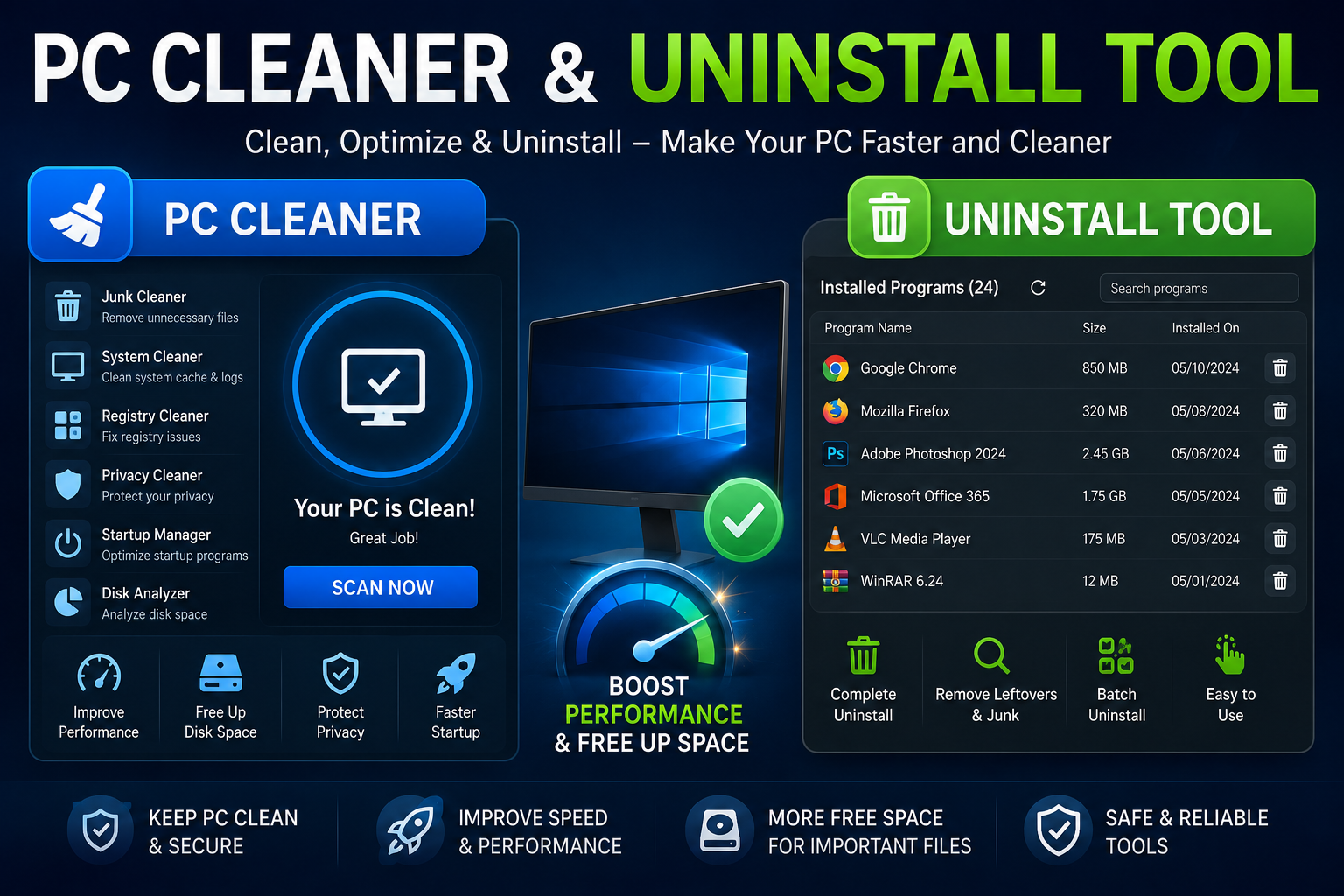

Modern computers are designed to handle multiple tasks efficiently, but over time they often become slower and less responsive. Temporary files, unnecessary programs, startup applications, and leftover system data can gradually reduce performance. Fortunately, users can restore speed and improve system efficiency with the help of a reliable PC cleaner and an effective uninstall tool.
These utilities are among the most important maintenance tools for Windows users. They help remove unwanted files, free up storage space, and eliminate software that is no longer needed. By performing regular maintenance, users can keep their computers running smoothly and extend the lifespan of their systems.
What Is a PC Cleaner?
A PC cleaner is a software application designed to remove unnecessary files and optimize system performance. During everyday use, computers generate temporary files, cache data, log files, and other digital clutter that occupies valuable storage space.
A quality PC cleaner scans the system and identifies files that can be safely removed without affecting normal operations. By cleaning these files, users can recover disk space and improve overall system responsiveness.
Common Functions of a PC Cleaner
Most PC cleaner applications offer features such as:
- Temporary file removal
- Browser cache cleaning
- Junk file deletion
- Startup optimization
- Registry cleanup
- Privacy protection
- Performance monitoring
These functions help maintain a cleaner and faster operating environment.
Benefits of Using a PC Cleaner
Improved Performance
One of the primary reasons people use a PC cleaner is to boost system speed. Removing unnecessary files reduces the workload on storage drives and allows the operating system to function more efficiently.
Increased Storage Space
Over time, temporary files can consume several gigabytes of storage. A PC cleaner helps recover valuable disk space by removing files that are no longer needed.
Faster Startup Times
Many programs automatically launch during startup. Some PC cleaners help manage startup items, allowing computers to boot faster.
Better Privacy
Browsers and applications store browsing history, cookies, and cached data. Cleaning these files helps protect user privacy.
Reduced System Clutter
Regular cleaning prevents the accumulation of unnecessary files and keeps the system organized.
Understanding an Uninstall Tool
An uninstall tool is specialized software that completely removes programs from a computer. While Windows includes a built-in uninstall feature, it often leaves behind leftover files, folders, registry entries, and configuration settings.
An uninstall tool goes beyond standard removal methods by scanning for residual data and deleting everything associated with the selected application.
This results in a cleaner system and prevents unnecessary storage consumption.
Why Standard Uninstall Methods Are Not Enough
Many users assume that uninstalling software through Windows completely removes it. However, this is not always the case.
Programs frequently leave behind:
- Configuration files
- Registry entries
- User data folders
- Log files
- Temporary files
- Installation remnants
These leftovers can accumulate over time and affect system performance.
A dedicated uninstall tool helps eliminate these hidden traces.
Advantages of Using an Uninstall Tool
Complete Software Removal
An uninstall tool thoroughly scans the system after removing a program and deletes any remaining files.
More Available Storage
Removing leftover files helps recover additional disk space.
Cleaner Registry
Unused registry entries can clutter Windows. Advanced uninstall tools identify and remove unnecessary entries safely.
Improved Stability
Removing outdated software remnants reduces the likelihood of software conflicts.
Easier Software Management
Many uninstall tools provide a complete overview of installed applications, making it easier to manage software.
How PC Cleaner and Uninstall Tool Work Together
A PC cleaner and uninstall tool complement each other perfectly.
An uninstall tool removes unwanted applications and associated leftovers. A PC cleaner then removes temporary files, browser data, and system junk that accumulate through everyday computer usage.
Together, they create a more efficient system maintenance routine.
For example:
- Uninstall unused software.
- Remove leftover files with an uninstall tool.
- Run a PC cleaner to eliminate temporary files.
- Optimize startup applications.
- Free up storage space.
This process helps maintain optimal system performance.
Features to Look for in a PC Cleaner
When choosing a PC cleaner, consider the following features:
Automatic Scanning
Automated scanning saves time and simplifies maintenance.
Safe Cleanup
The software should identify files that can be removed without harming the operating system.
Startup Manager
Managing startup programs can significantly improve boot speed.
Privacy Protection
Built-in privacy tools help remove browsing traces and temporary data.
User-Friendly Interface
Simple navigation makes the software accessible for beginners.
Features to Look for in an Uninstall Tool
Not all uninstall tools offer the same capabilities.
Important features include:
Deep Scan Technology
Deep scanning ensures leftover files are detected and removed.
Batch Uninstall
This feature allows users to remove multiple programs simultaneously.
Installation Monitoring
Some tools track software installations to enable more complete removal later.
Browser Extension Removal
Advanced uninstall tools can remove unwanted browser extensions and plugins.
System Restore Support
Restore options provide extra safety before making significant changes.
Best Practices for Maintaining PC Performance
Even with powerful software tools, users should follow good maintenance habits.
Remove Unused Programs
Review installed applications regularly and uninstall software that is no longer needed.
Perform Routine Cleaning
Running a PC cleaner weekly helps prevent junk file accumulation.
Update Software
Keeping applications updated improves security and performance.
Monitor Storage Usage
Avoid filling storage drives to maximum capacity.
Restart Regularly
Periodic restarts help refresh system resources and improve stability.
Common Myths About PC Cleaning Software
Myth 1: Cleaning Is Only Necessary for Old Computers
Even modern computers accumulate temporary files and benefit from regular maintenance.
Myth 2: Manual Cleanup Is Always Enough
Manual cleanup can help, but automated tools often identify hidden files that users may overlook.
Myth 3: Uninstalling Software Removes Everything
Most standard uninstall methods leave residual files behind, making uninstall tools valuable.
The Future of PC Optimization Software
As operating systems become more advanced, optimization tools continue to evolve. Artificial intelligence and smart automation are being integrated into modern PC cleaner and uninstall tool solutions.
Future software may automatically detect performance issues, recommend optimizations, and perform maintenance tasks with minimal user involvement.
These innovations will make computer maintenance easier and more effective than ever before.
Conclusion
A reliable PC cleaner and a powerful uninstall tool are essential for maintaining a fast, organized, and efficient computer. While a PC cleaner removes junk files and improves performance, an uninstall tool ensures complete software removal without leaving unwanted traces behind.
By using both tools regularly, users can free up storage space, enhance system responsiveness, improve privacy, and extend the overall lifespan of their computers. Proper maintenance remains one of the simplest and most effective ways to keep any PC running at its best.