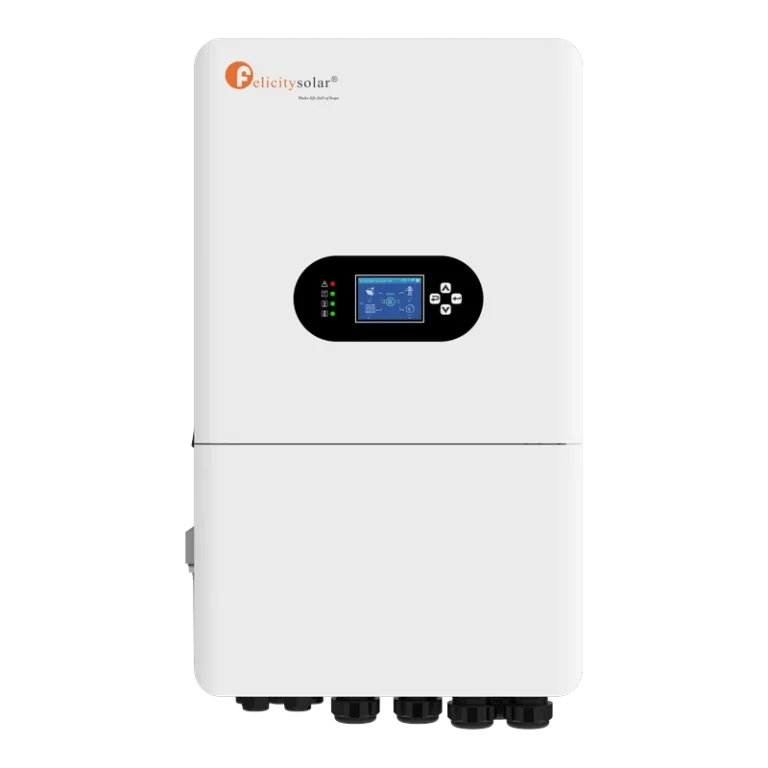

The decision to invest in a hybrid solar inverter is fundamentally a financial decision, one that requires careful analysis of costs, savings, and returns across the system’s lifetime. This sophisticated device, which combines solar inversion and battery management into a single integrated unit, is the key that unlocks the full economic potential of solar-plus-storage systems. The financial benefits of a hybrid solar inverter extend far beyond simply converting DC to AC, encompassing demand charge reduction for commercial customers, time-of-use arbitrage, increased solar self-consumption, and participation in grid services markets. For commercial and industrial facilities, the savings from peak shaving alone can be transformative, because demand charges can constitute 30 to 70 percent of a monthly electricity bill, and a properly sized system can shave peak demand by 20 to 50 percent. The internal rate of return for a solar-plus-storage system with a hybrid solar inverter typically ranges from 12 to 25 percent, depending on the application and market conditions, with payback periods of four to eight years being common. The total value proposition includes not just the quantifiable savings but also the intangible benefits of energy security, price predictability, and protection against future utility rate increases. For businesses, the hybrid solar inverter is not just an energy device but a strategic financial tool that enhances competitiveness and builds long-term value.
The Incentive Landscape and Policy Support
The economics of the hybrid solar inverter are significantly influenced by the incentive landscape and policy support available across different markets. The federal Investment Tax Credit provides a 30 percent credit on the cost of solar-plus-storage systems when the battery is charged from solar, reducing the net capital cost and improving return on investment. State-level incentives, including additional tax credits, rebates, and performance-based incentives, can further enhance the financial case for hybrid solar inverters, with some markets offering substantial additional support. The net metering programs, where available, provide credits for excess solar energy exported to the grid, effectively using the grid as a virtual battery and enhancing the value of solar generation. The time-of-use rate structures that many utilities have implemented create the price differentials that time-of-use optimization captures, with peak rates often two to four times higher than off-peak rates, creating substantial savings opportunities. The demand response programs, where utilities pay customers to reduce their electricity consumption during peak periods, provide additional revenue streams for hybrid solar inverter owners, with payments typically ranging from $50 to $200 per kilowatt of capacity enrolled. The capacity market payments available in some regions, where battery owners are paid for committing to provide capacity when needed, add another layer to the financial returns, with typical payments of $100 to $300 per kilowatt-year. The evolving policy landscape continues to expand the financial opportunities available to hybrid solar inverter owners, making the investment increasingly attractive.
The Return on Investment Analysis
A comprehensive return on investment analysis for a hybrid solar inverter considers multiple value streams and projects them over the expected lifetime of the equipment. The savings component includes the avoided cost of electricity from reduced grid purchases, which for a typical residential system ranges from $1,000 to $2,500 annually depending on utility rates and solar resource. For commercial systems, the savings are larger, with a 250-kilowatt solar-plus-storage system potentially saving $40,000 to $80,000 annually in electricity costs. The incentive component includes the federal tax credit and any state-level incentives, which can reduce the net cost of the system by 30 percent or more, significantly improving the return on investment. The revenue component includes any income from demand response, capacity markets, or other grid services, which can add $5,000 to $20,000 annually for a typical commercial system. The avoided cost of grid outages is another important consideration, because the backup power capability of the hybrid solar inverter provides protection against the financial losses that can result from power interruptions. The risk premium is also a valuable component, because the investment provides hedge against future utility rate increases, which have historically averaged 3 to 5 percent annually but can be much higher in some regions. The total return on investment for a hybrid solar inverter system typically ranges from 15 to 30 percent, with most systems achieving payback within five to eight years and continuing to generate savings for the remaining 10 to 15 years of useful life.
The Financing and Ownership Structures
The financing and ownership structure selected for a hybrid solar inverter system significantly impacts the financial returns and the accessibility of the investment. The direct purchase model, where the owner buys the system outright, captures all the financial benefits and offers the highest long-term returns, but it requires significant upfront capital and may not be accessible to all property owners. The solar lease model, where a third party owns the system and the property owner pays a fixed monthly fee for the electricity generated, offers immediate savings with no upfront investment, but the property owner does not capture the full financial benefits. The power purchase agreement model, where the property owner pays for the electricity generated at a fixed rate that is typically below the utility rate, also provides immediate savings with no upfront investment, and the developer captures the incentives and depreciation benefits. The loan financing model, where the property owner borrows the funds to purchase the system and repays the loan over time, offers a middle ground that captures the financial benefits while spreading the cost, with loan terms typically ranging from 10 to 20 years. The on-bill financing models, where the cost is repaid through a charge on the utility bill, offer another option that does not require collateral and can be transferred if the property is sold. The selection of the appropriate financing structure depends on the property owner’s financial position, tax situation, risk tolerance, and strategic objectives, and working with experienced solar financiers is essential to structuring a successful arrangement.
The Comparative Economics Across Different Applications
The financial returns of a hybrid solar inverter vary significantly across different applications, reflecting the different value propositions and market conditions in each segment. In the residential market, the primary value drivers are self-consumption maximization and time-of-use arbitrage, with typical returns of 12 to 18 percent, and the backup power capability adds significant intangible value for homeowners concerned about grid reliability. In the commercial market, the primary value drivers are demand charge reduction and participation in grid services, with typical returns of 18 to 25 percent, and the larger system sizes result in lower installed costs per kilowatt. In the industrial market, the primary value drivers are demand charge reduction, backup power for critical equipment, and participation in capacity markets, with typical returns of 20 to 30 percent, and the high cost of production interruptions makes the backup power value substantial. In the agricultural market, the primary value drivers are demand charge reduction and time-of-use arbitrage for irrigation and processing equipment, with typical returns of 15 to 22 percent. In the institutional market, such as schools and municipal buildings, the primary value drivers are long-term operating cost reduction and demonstration of sustainability leadership, with typical returns of 10 to 16 percent. The comparative economics across different applications illustrate the versatility of the hybrid solar inverter and its ability to deliver value across a wide range of use cases.