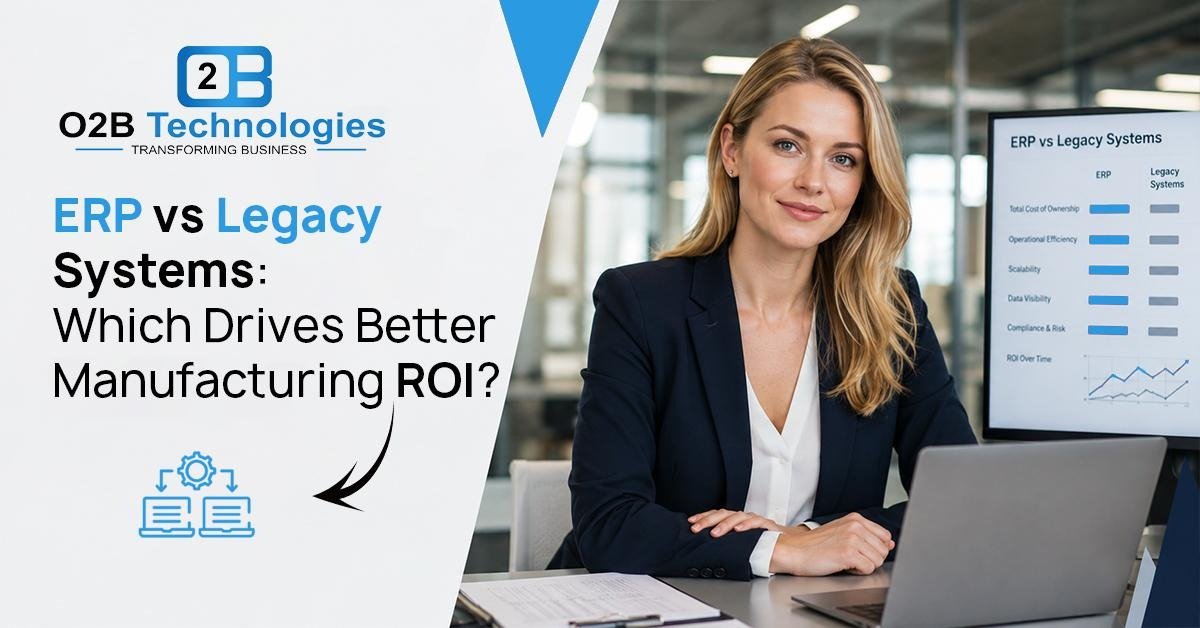

Legacy ERP systems vs. modern cloud-based ERP platforms. It’s a decision that can make or break a manufacturing organization. The decision has significant financial and operational implications.
The data shows that modern ERP delivers superior ROI across multiple dimensions. This article examines the evidence.
The Financial Reality of Legacy Systems
Legacy systems appear cost-effective because licensing fees are fully depreciated. This perception is misleading.
IT Budget Allocation: A mid-sized manufacturer was allocating 35 percent of its IT budget to a 15-year-old legacy system. After migration, maintenance costs decreased by 50% and system downtime decreased by 40%.
Labor Costs: Legacy systems use proprietary languages like COBOL and RPG. The pool of talent for these languages is rapidly shrinking. Specialty consultants can charge $200 to $400 an hour. The costs are going up each year as seasoned professionals retire.
Integration costs: legacy ERPs don’t have modern APIs. Linking them to CRM platforms, e-commerce tools and supply chain partners means buying costly middleware. The integration between purchasing, production, logistics and finance is not there and teams have to do manual entry of data. This leads to errors, delays and inconsistent reporting.
Security Risks: The vendor does not support older systems, they do not have multi-factor authentication, and they do not get regular security patches. They are still susceptible to cyberattacks that could expose sensitive manufacturing data.
ROI Advantages in Today’s ERP
Today’s ERP platforms generate measurable benefits in a number of operational areas.
Scalability: Legacy systems break down when data or users scale. Scaling demands hardware investments that can quickly become obsolete. Cloud ERP can easily scale without upgrading infrastructure.
Real Time Visibility: Old systems give delayed batch reports. Real-time dynamic analytics are available today in production, inventory, HR, finance and logistics through today’s platforms. This removes operational blind spots.
Data Integration: Modern ERPs connect all departments in real time. Finance calls up production costs immediately. Inventory managers are constantly monitoring the raw materials. Decision-makers see performance dashboards without delay.
Technology compatibility: Unlike the older ERPs, the modern ERPs are written in standard programming languages such as Java and HTML. They are integrated with AI, machine learning and IoT sensors. These are not things that legacy systems can support.
Odoo is an example of modern ERP tools, providing a fully integrated open source ERP platform. It has a modular functionality for sales, inventory, manufacturing, accounting and HR. O2B Technologies is one of the Odoo implementation partners that has helped manufacturing companies of all sizes migrate successfully.
The Sunk Cost Trap
Manufacturers often delay ERP replacement due to substantial prior investments. This is the sunk cost fallacy.
Organizations think: “We have spent millions customizing this system. Employees know how to use it. We should maximize our investment.”
This logic is flawed. The investment is already spent and cannot be recovered. The relevant question is whether the current system supports future business needs.
Many manufacturers abandon systems they spent years implementing. The reason isn’t that the original investment was a mistake. It is that business requirements changed while the system did not.
Key Decision Factors
What should organizations think about when looking at ERP replacement?
Business Alignment: Is the current system in line with the direction the company is moving? Legacy systems were designed for other operating models. Today’s ERPs enable digital transformation, supply chain complexity and real-time decision making.
Total Cost of Ownership: All costs including maintenance, integration, consultants and downtime. Compare against modern ERP subscription costs. The total cost picture often favors modern platforms.
Competitive Position: Today’s ERPs enable companies to respond more quickly to market changes. They help optimise inventory, reduce waste, and improve customer satisfaction. Legacy-dependent players are falling behind.
Risk Assessment: Legacy systems pose operational, security and talent risks. Migration reduces long-term vulnerabilities but transition risks remain
Modern ERP delivers a better ROI than legacy systems. The data supports this conclusion on cost reduction, operational efficiency and strategic capability.
Migrations are a transition requiring an initial investment and effort. The alternative is the continued operational drag, increased costs and competitive disadvantage.
Manufacturing organizations must evaluate whether their current ERP system supports future business requirements. For most, the answer is no.
The question is not whether organizations can afford to upgrade. The question is whether they can afford not to.
READ ALSO: What Is a One Way Video Interview and How Does It Work?