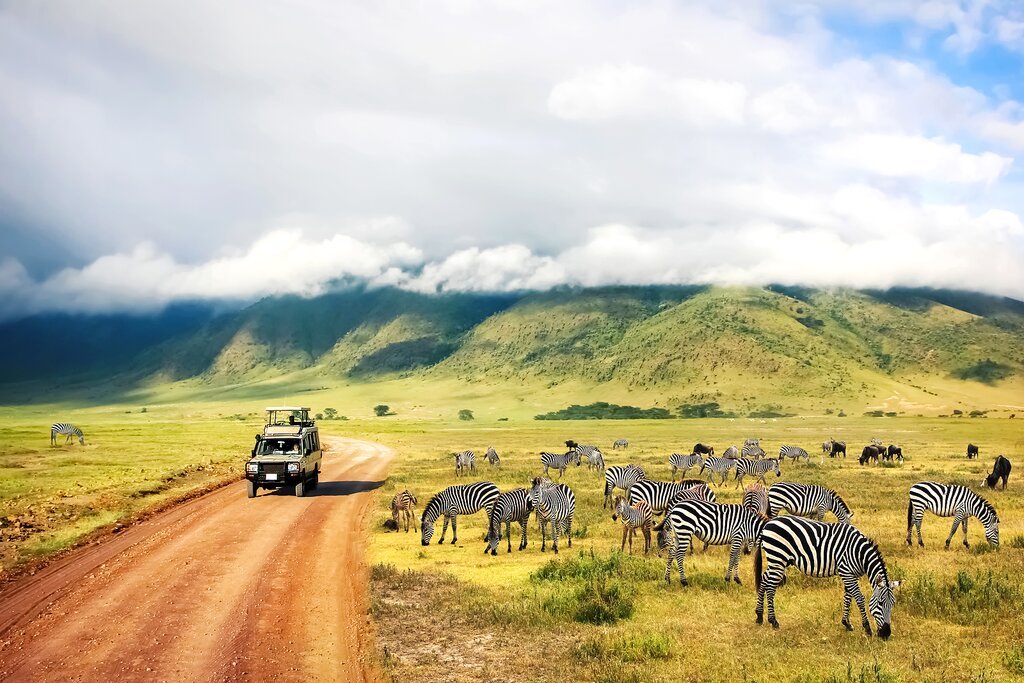

Tanzania spans an area larger than Texas and California combined, which means weather patterns, wildlife behavior, and crowd levels shift dramatically depending on where you go and when. There’s no single “best” month that works for every traveler, but there are clear patterns that make planning much easier once you understand them. This guide breaks down what to expect throughout the year so you can match your trip to your priorities, whether that’s the wildebeest migration, gorilla-free budget safaris, or a beach add-on in Zanzibar.
The Dry Season (June to October) for Classic Safari
This stretch is widely considered the prime window for safari travel, and for good reason. Vegetation thins out during these months, forcing animals to congregate around rivers and waterholes, which makes wildlife sightings far more predictable. Temperatures stay comfortable, hovering between 75-85°F during the day and dropping into the 50s at night, with minimal rainfall to interrupt game drives.
This is also when the Serengeti sees some of its most dramatic migration action, particularly the river crossings at the Grumeti and Mara rivers between July and September. Expect higher park fees and lodge rates during this period, along with more vehicles at popular sighting spots. Booking six to twelve months ahead is standard practice if you want specific camps in the northern Serengeti during peak crossing season.
The Short Rains (November) for Shoulder-Season Value
November occupies an underrated spot on the calendar. Rain tends to arrive in brief afternoon showers rather than all-day downpours, and the landscape turns green and photogenic almost overnight. Bird watchers in particular favor this month, since migratory species arrive from Europe and Asia, adding hundreds of new sightings to an already rich birdlife.
Lodge rates typically drop by 20 to 30 percent compared to peak season, and crowds thin out considerably. Wildlife is still very visible, since the short rains don’t scatter animals the way the long rains later in the year can. This makes November a smart pick for travelers who want a strong safari experience without peak-season pricing.
The Calving Season (Late January to February) in the Southern Serengeti
If witnessing new life ranks high on your list, late January through February delivers something special. Over 500,000 wildebeest calves are born within a few weeks in the short-grass plains of the southern Serengeti and Ndutu area, often at a rate of several thousand per day. This concentration of newborns draws predators in large numbers, making it one of the most action-packed times to be on safari.
Days are warm and mostly dry, with occasional brief showers, and the plains are covered in grass that hasn’t yet grown tall enough to obscure sightlines. Ndutu camps book up quickly for this window, so reserving well in advance matters here too.
The Long Rains (March to May) for Budget Travel and Solitude
March through May brings the heaviest rainfall of the year, and many camps in the Serengeti and Ngorongoro area close temporarily or offer steep discounts. Roads can turn muddy and some remote areas become difficult to access, which is why this period sees the fewest visitors of the year.
That said, this isn’t a dead zone for wildlife. Resident animals remain in place, birdlife is abundant, and the scenery turns lush and dramatic. For travelers comfortable with unpredictable weather and fewer crowds, this window offers some of the best value on Tanzania tours, with rates often 30 to 40 percent lower than peak season and a noticeably quieter experience at major parks.
Zanzibar and the Coast: A Different Calendar
Zanzibar and the coastal regions operate on their own rhythm, separate from the inland safari circuits. The best beach weather runs from June through October and again from December through February, with warm temperatures, low humidity, and calm seas ideal for diving and snorkeling around Mnemba Atoll. March through May brings the rainy season here as well, and many beach resorts close or reduce rates significantly during this stretch.
Combining a safari with a few days on Zanzibar works well logistically, since flights between Arusha or Kilimanjaro and Zanzibar run frequently and take under two hours. Timing both halves of the trip around the dry season on each end keeps the itinerary simpler.
Climbing Kilimanjaro: Timing Matters
Kilimanjaro can technically be climbed year-round, but the driest and most stable conditions fall in January-February and June-October. These windows offer clearer skies, better summit views, and reduced risk of snow and ice on the trail. The rainy seasons make trails slippery and visibility poor, which increases both discomfort and risk on longer routes like Lemosho or Machame.
Matching the Season to Your Priorities
There’s no universally correct time to visit Tanzania, only the time that fits what matters most to a particular trip. Chasing river crossings points toward July through September. Watching newborn wildebeest points toward late January and February. Stretching a travel budget points toward April, May, or November. Whatever the priority, booking accommodations and park permits early remains the single most useful step, since availability in top-tier camps shrinks fast regardless of season.